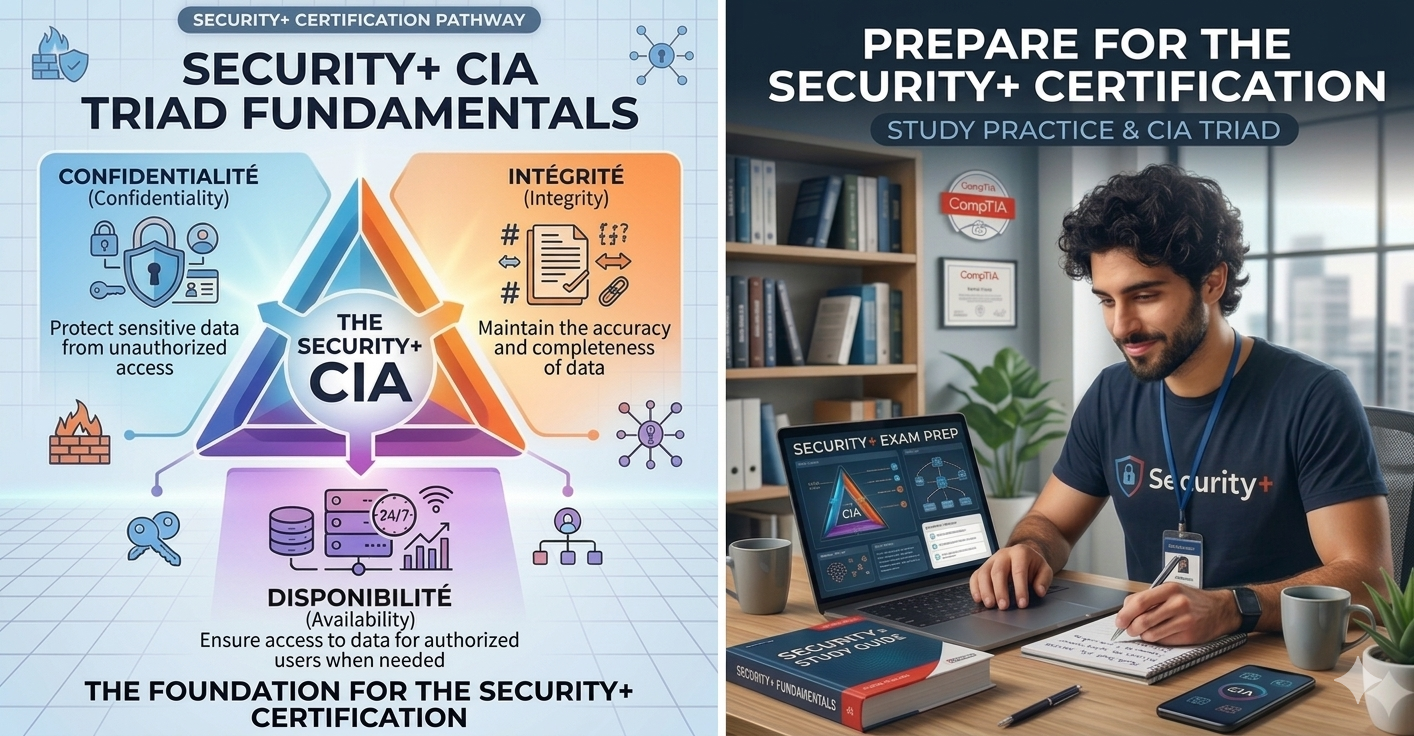
CIA Triad explained with real examples: confidentiality, integrity and availability (Security+)
The CIA Triad protects data through confidentiality, integrity, and availability. Understanding real-world scenarios is key to passing Security+.
🔐 Why is the CIA Triad so important?
Understanding theory is easy.
👉 Applying it is what really matters.
The CIA Triad (Confidentiality, Integrity, Availability) is a core concept in cybersecurity and appears frequently in Security+ exams.
If you need a quick refresher:
👉 https://www.certifyquiz.com/certifications/security-plus/security-fundamentals
🧠 Real-world example 1: company database
A company stores customer data.
- Confidentiality → only authorized users can access data
- Integrity → data must not be altered
- Availability → systems must remain accessible
👉 If one fails, security is compromised.
⚠️ Real-world example 2: cyber attack
An attack can impact different aspects:
- Data theft → breaks confidentiality
- Data modification → breaks integrity
- Server downtime → breaks availability
👉 This is exactly how exam questions are structured.
🛠️ How to protect the CIA Triad
Each principle has its own controls:
Confidentiality
- Encryption
- Authentication
- Access control
Integrity
- Hashing
- Logging
- Version control
Availability
- Backups
- Redundancy
- Disaster recovery
🎯 Exam question example
Question:
A DDoS attack affects which principle?
A. Confidentiality
B. Integrity
C. Availability
D. Authentication
Correct answer: C
🚀 Practice this topic now
Don’t just read—practice.
👉 Start here:
👉 https://www.certifyquiz.com/certifications/security-plus/security-fundamentals
🔗 Explore the full Security+ certification
Discover your level
Take the free test and get your result by email.
Discover your level
Take the free test and get your result by email.
Ready to practice?
Jump into quizzes, train with realistic questions, and track your progress.